Kentucky sets the standard for all things equine—from training and maintenance to housing and upkeep. From manicured paddocks of Bluegrass to the rolling pastures of the Knobs region, Kentucky horse farms demand engaged property management beyond what most rural operations require. Keeping a horse conditioned is a year-round job that requires top-of-the-line equipment.
Find Your Local Wright Implement
Pasture Management: The Foundation of a Healthy Horse Farm
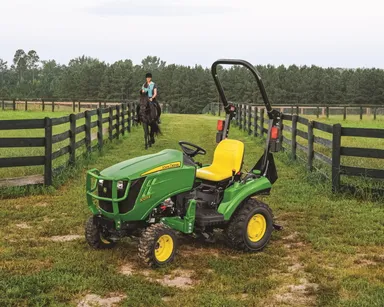
Pasture quality is one of the first concerns of maintaining your horse’s health. Kentucky’s climate gives you the tools to grow exceptional forage. A compact utility tractor in the 40-60 horsepower range is a staple on most equipment properties, capable of handling everything from rotary cutting and fertilizing to light tillage for overseeding.
Rotary cutters are an essential tool for keeping pastures at the right height and preventing selective grazing and unwanted weeds. For farms with multiple paddocks, a finish mower allows for maintenance on higher-traffic areas that require a more manicured standard. Overseeding worn pastures in late summer and early fall keeps stands thick and ward off weeds—a concern in Kentucky’s warm, wet summer conditions.
Browse John Deere Compact Utility Tractors
Arena and Paddock Maintenance
High-traffic areas take a lot of abuse and require constant attention. A box blade or rear blade levels ruts, redistributes footing material, and manages drainage to keep muddy paddock conditions to a minimum.
For farms with sand or synthetic arena footing, a drag harrow helps to keep the surface consistent and prevent compaction. Consistent footing isn’t just about aesthetics—it directly impacts the joint health of horses working in that arena day after day.
Browse Frontier Attachments Now
Manure Management Done Right
Manure management can be one of the most demanding and time-intensive aspects of a horse farm operation. A compact tractor with a front-end loader can dramatically decrease time spent managing, moving, loading and spreading material by hand.
A manure spreader is one of the best investments a Kentucky horse farm can make. Properly composted manure is a valuable soil amendment for your pastures, returning vital nutrients and reducing the necessity for fertilizer inputs. Match your spreader capacity to your herd size. Smaller 40-80 bushel models suit modest farms, while larger operations will benefit from a pull-type spreader with a higher capacity. Consistent spreading will reduce parasite pressure in pastures, as well.
Browse Frontier Manure Spreaders
Hay Production and Storage
Many Kentucky horse farms produce hay. Quality horse hay like timothy, orchard grass, and alfalfa demand premium prices when purchasing. Producing your own hay gives you control over cutting timing, curing conditions, and bale quality. A 50+ horsepower compact or utility tractor handles a full hay-making implement lineup including mower-conditioner, tedder, rake, and baler.
Even if you're not baling your own hay, a tractor with a spear attachment or bale carrier is essential for moving round bales safely and efficiently. Wrestling a 1,000-pound round bale without proper equipment isn't just inefficient — it's dangerous. Covered storage protects your hay investment from Kentucky's unpredictable weather and prevents the mold issues that make hay unsuitable for horses.
Even if you’re not baling your own hay, a tractor with a bale spear attachment is essential for moving round bales efficiently. Wrestling a 1,000-lb. round bale without the proper equipment isn’t just time-consuming, it’s dangerous.
Talk to a Wright Implement Equipment Specialist
Fencing and Property Upkeep
Horse-safe fencing requires regular inspection and meticulous upkeep. A tractor equipped with a post-hole digger makes fence repair and installation a sustainable routine task rather than a major project. Keeping fence lines clear with a boom mower or rotary cutter prevents brush encroachment.
For farms with gravel lanes and driveways, a box blade or grading attachment keeps surfaces smooth and maintains important drainage systems for safe operation of horse trailers and other farm vehicles.
Investing in Your Farm's Standard
Kentucky horse farms represent a significant investment in land, animals, infrastructure, and upkeep. Successful property management requires equipment to protect that investment and keep pastures productive. A well-equipped equine operation doesn’t just look better, it operates better and holds its value better. That way, you can focus on what truly matters: the horses.
Contact Wright Implement Now

.svg)
.svg)
.svg)
.svg)

.svg)
.svg)
.svg)
.svg)
.svg)
.svg)